Instruments Through Time

Each piece in this collection carries a story — a lens ground by hand, a brass arm calibrated beneath candlelight, a dial worn smooth by a navigator's thumb.
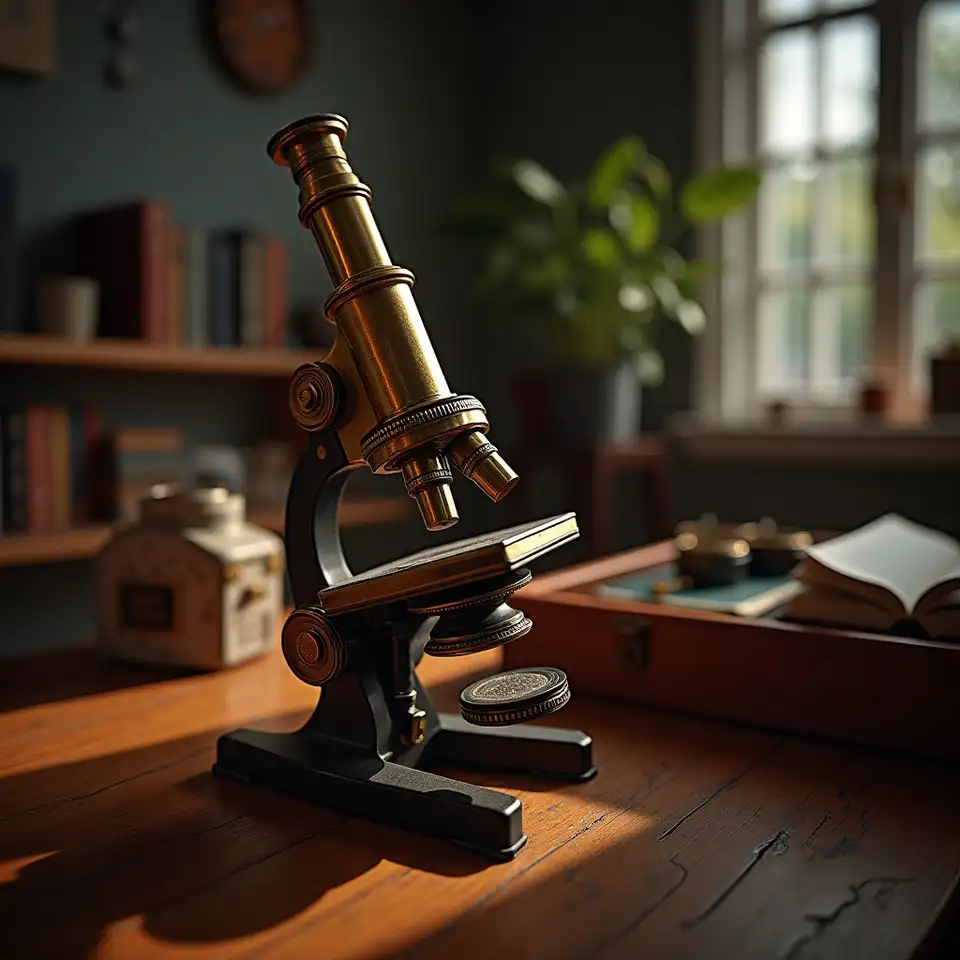
A beautifully preserved nineteenth-century brass compound microscope resting inside its original fitted wooden case, showing fine mechanical detail and warm amber patina across every surface.
1

Brass Compound Microscope

A beautifully preserved nineteenth-century brass compound microscope resting inside its original fitted wooden case, showing fine mechanical detail and warm amber patina across every surface.

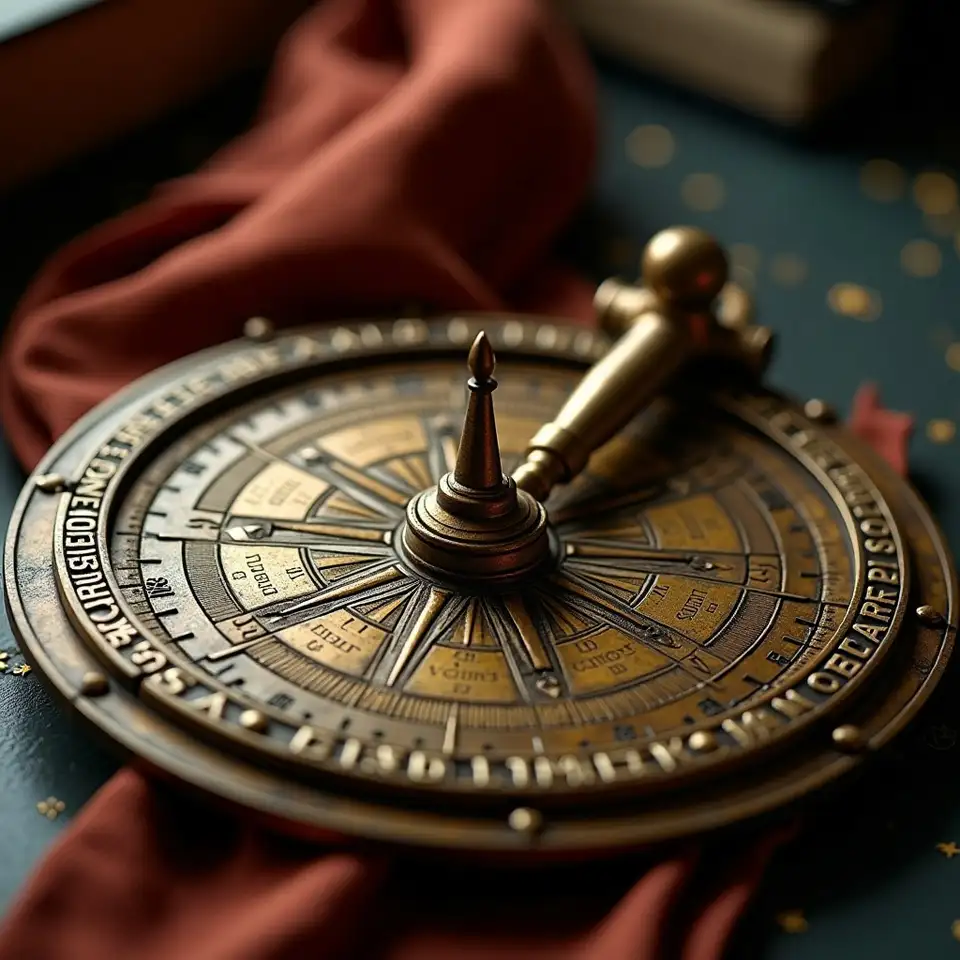
An intricately engraved bronze astrolabe with Arabic numerals along the limb, its rete finely cut to represent the fixed stars visible from the northern hemisphere in centuries past.
2

Engraved Bronze Astrolabe

An intricately engraved bronze astrolabe with Arabic numerals along the limb, its rete finely cut to represent the fixed stars visible from the northern hemisphere in centuries past.

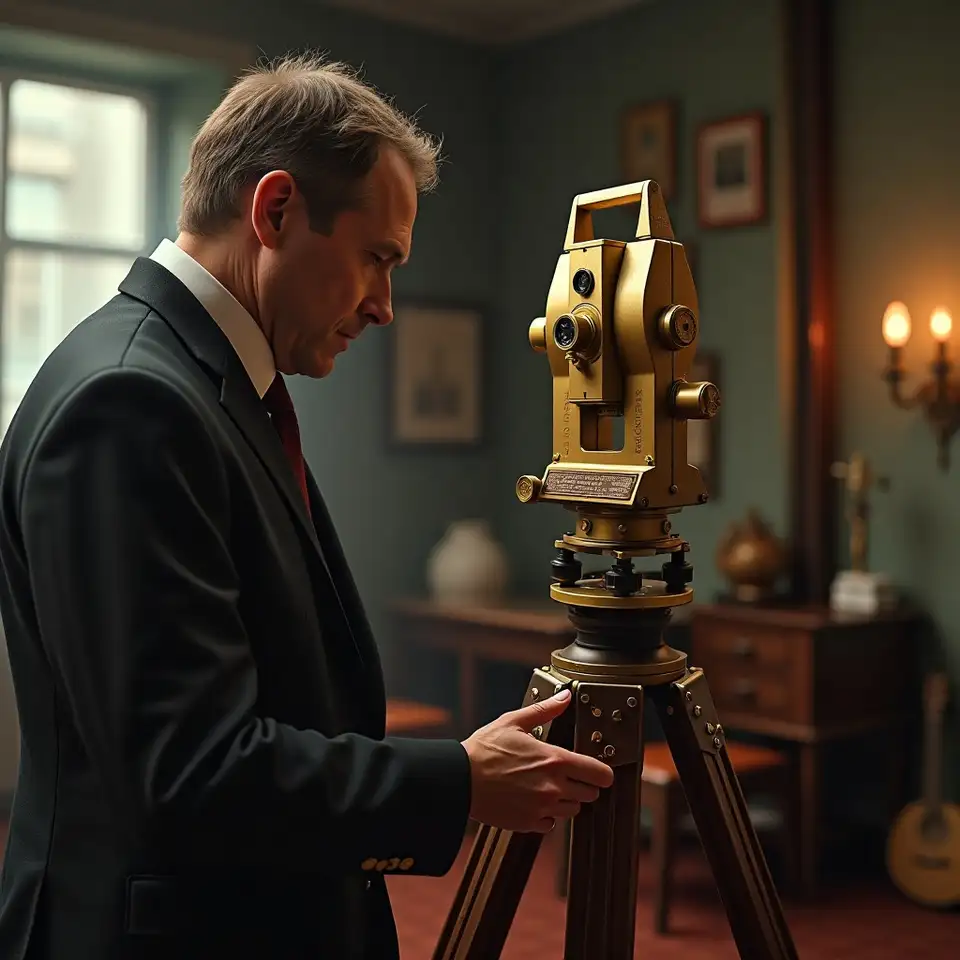
A late Victorian brass theodolite mounted on its original mahogany tripod, with vernier scales and a bubble level still perfectly intact after more than a hundred years of careful storage.
3

Victorian Theodolite

A late Victorian brass theodolite mounted on its original mahogany tripod, with vernier scales and a bubble level still perfectly intact after more than a hundred years of careful storage.
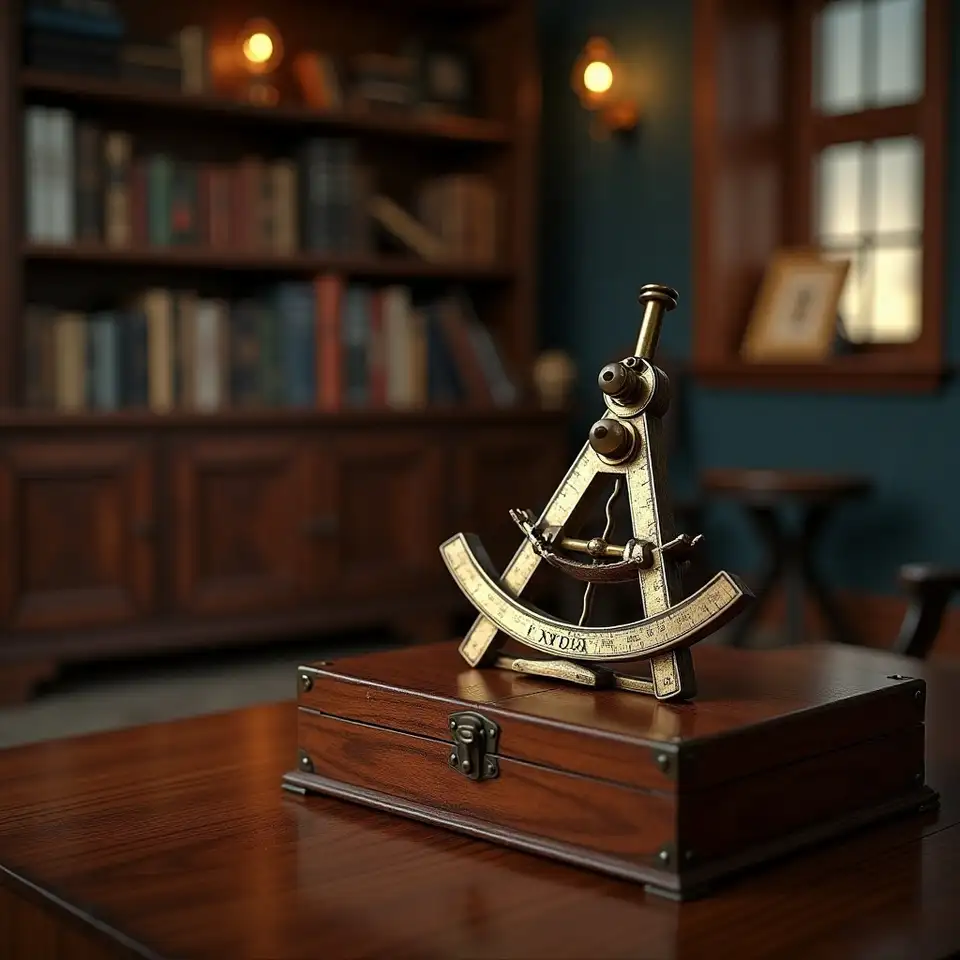
A ship's sextant in polished brass stored within a dovetail mahogany box, its mirrors undimmed and its arc scale as crisp as the day a craftsman in London stamped his maker's mark.
4

Nautical Brass Sextant

A ship's sextant in polished brass stored within a dovetail mahogany box, its mirrors undimmed and its arc scale as crisp as the day a craftsman in London stamped his maker's mark.

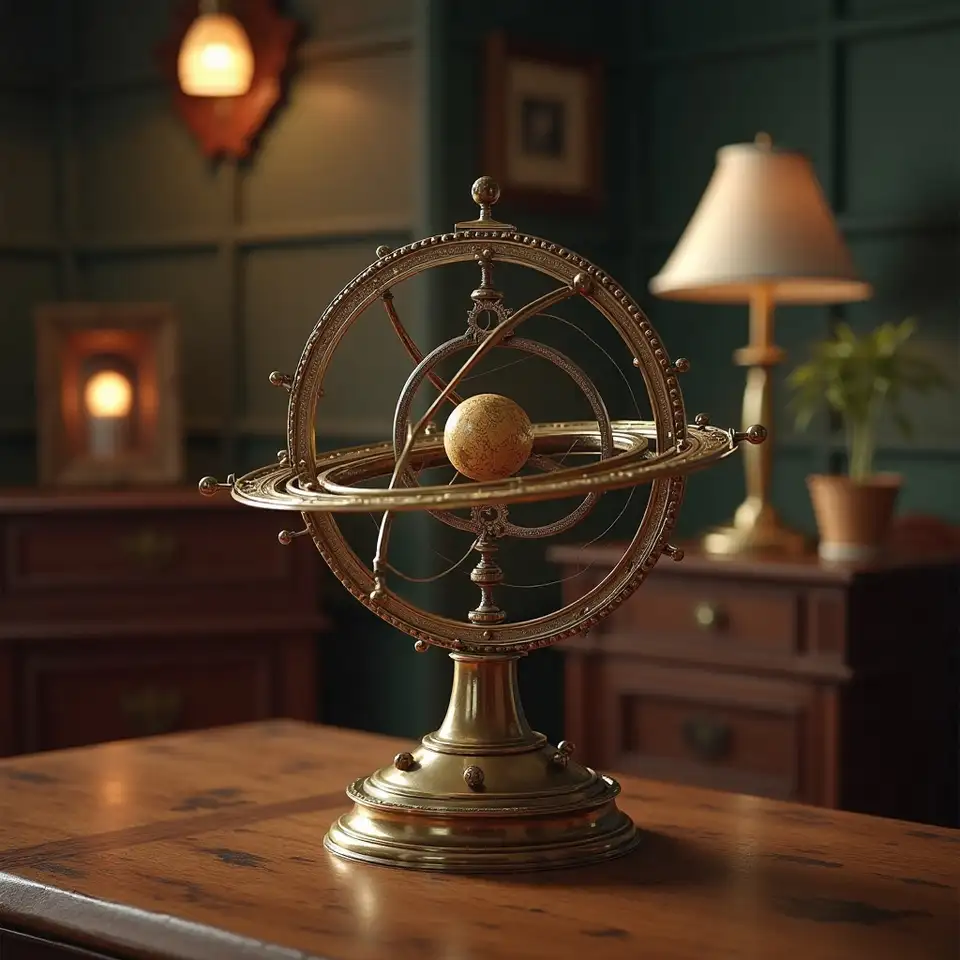
A tabletop orrery with gilded planetary spheres arranged on slender brass arms, driven by a clockwork mechanism that still turns smoothly when wound with its original key.
5

Clockwork Orrery

A tabletop orrery with gilded planetary spheres arranged on slender brass arms, driven by a clockwork mechanism that still turns smoothly when wound with its original key.

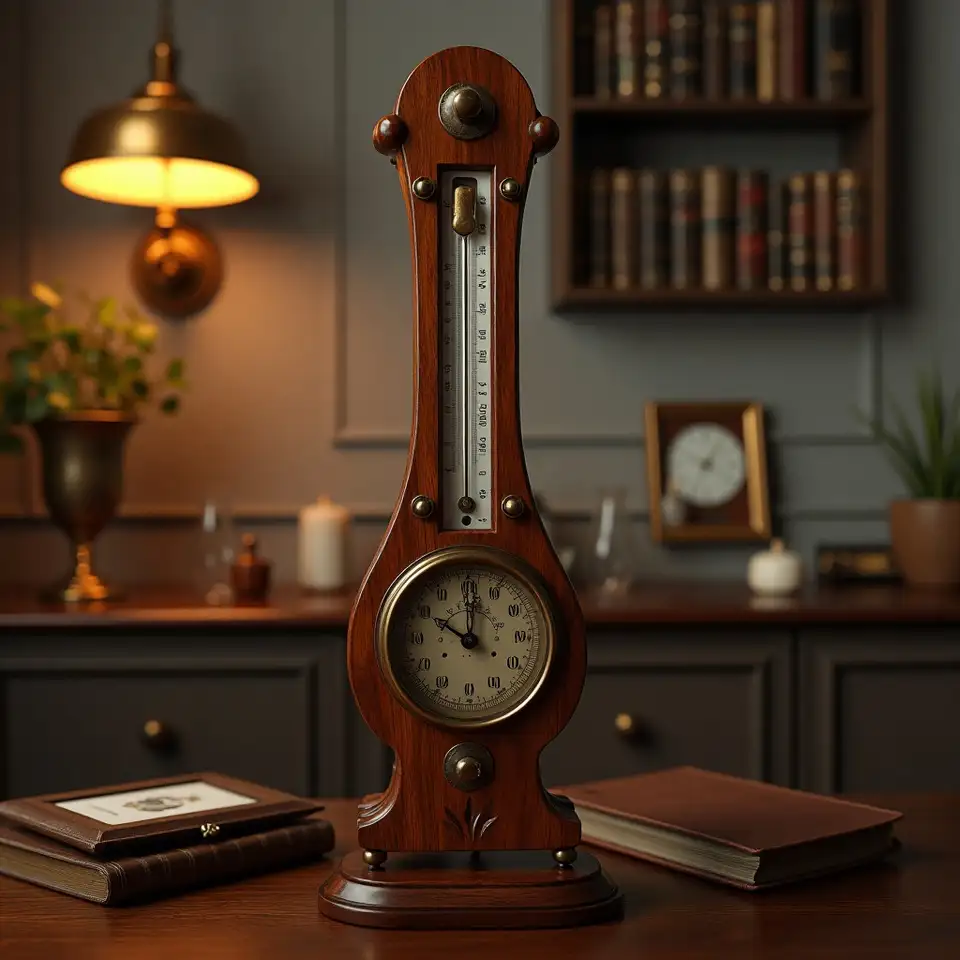
A walnut-cased mercury barometer with an ivory scale and hand-painted dial, its cistern cover still sealed with the original wax that a Victorian instrument maker pressed into place.
6

Mercury Barometer

A walnut-cased mercury barometer with an ivory scale and hand-painted dial, its cistern cover still sealed with the original wax that a Victorian instrument maker pressed into place.

Why I Fell in Love With Old Scientific Instruments, and Never Looked Back

There is a particular pleasure in holding something that once helped a physician see invisible life or a sailor find his position on a featureless ocean.
I remember the first piece I ever handled — a small brass microscope, cold and surprisingly heavy, smelling faintly of machine oil and old wood.
I had no idea what I was looking at. The seller explained it was a mid-nineteenth-century monocular microscope, probably used by a country doctor to examine blood samples. That single sentence changed the way I saw every object on that table. These were not decorations. They were tools that shaped how human beings understood the physical world around them.

Antique scientific instruments occupy an unusual corner of the collectible market. They sit at the intersection of craft, science, and history. A well-made astrolabe is simultaneously a mathematical device, a work of engraved art, and a document of the astronomical knowledge available to its maker. Owning one is like holding a conversation across centuries.

I have spent a long time learning how to read these objects — not just their maker's marks and date stamps, but the wear patterns that reveal how they were used, the repairs that show how much they were valued, and the cases that tell you who could afford to commission them in the first place. That knowledge is what this site is built on, and I am glad to share it with you.

The first step is physical examination. I look at the alloy composition of the metal under magnification, the tool marks left by the original lathe or engraving burin, and the patina that forms on brass and bronze over decades of exposure to air. A reproduction can be aged artificially, but the tool marks are almost impossible to fake convincingly if you know what genuine period work looks like.

The second step is provenance research. Where did this piece come from? Can I trace it through auction records, estate inventories, or scientific institution catalogues? A documented chain of ownership does not prove authenticity by itself, but it adds a layer of confidence that physical examination alone cannot supply. I keep access to several specialist archives for exactly this purpose.
The third step is comparative analysis. I place the instrument beside documented examples from museum collections and published reference catalogues. Maker's marks, engraving styles, and scale graduations all varied by workshop and by period. A compass rose that looks slightly wrong for its supposed decade of manufacture is a flag worth investigating further before any valuation is offered.

A Collector's Honest Philosophy

Collector examining antique scientific instruments at a wooden desk under warm lamp light

I do not believe that every antique scientific instrument is a sound addition to a collection. Some pieces are overpriced relative to their condition, their provenance is murky, or they are simply not interesting enough to justify the space and care they require. I say this plainly because I think collectors deserve honesty more than they deserve enthusiasm. The instruments I discuss on this site are ones I find genuinely compelling — objects where the craft is evident, the history is traceable, and the collecting rationale is clear. I came to this field not as an investor chasing appreciation but as someone who found the objects themselves fascinating. The financial dimension of collecting is real, and I address it directly throughout this site, but it is never the whole story. Past performance of any collectible category does not guarantee future results, and anyone approaching this field purely as a financial exercise should keep that fact firmly in mind. What I offer here is the kind of informed perspective that comes from sustained, hands-on engagement with the objects themselves.

The Principles That Guide My Approach to Instrument Collecting and Research

I have structured the content here around the questions I hear most often from people who are new to antique scientific instruments and curious about where to begin.

What You Will Find on This Site and How I Have Organized It

Think of this site as a reference you return to rather than a brochure you read once and set aside.
The instrument guides cover specific categories — microscopes, astrolabes, sextants, barometers, and a handful of rarer types — with enough detail to help a newcomer recognize quality and enough depth to be useful to someone who has been collecting for years. I describe what to look for, what to avoid, and how to think about condition grading in each category.
The authentication section goes deeper into the methods I described above, with examples drawn from real examination cases. I use analogy wherever I can, because the logic of reading physical evidence is easier to grasp when it is compared to something familiar. Detecting a re-lacquered brass surface, for instance, is not unlike spotting a freshly painted fence post in a garden of weathered wood.

The market commentary is deliberately measured. I do not chase trends or encourage speculation. I describe what I observe in auction results, dealer pricing, and collector demand over time, and I am careful to note that past patterns in any collectible category do not reliably predict what comes next. Anyone exploring this field with financial motivations should approach it with the same sober curiosity they would bring to any area where outcomes are inherently uncertain.

Four Things I Wish Someone Had Told Me at the Start

When I began collecting antique scientific instruments, I made every predictable mistake. I overpaid for pieces with undisclosed repairs. I passed on instruments that seemed too expensive and watched them sell for twice the price two years later. I bought things I thought I should want rather than things I actually found compelling. The lessons below cost me time and money to learn. They are free to you.
Start With One Category

The field is broad enough to consume several lifetimes. Microscopes alone branch into monocular, binocular, petrographic, and demonstration types, each with its own history and its own community of knowledgeable collectors. Choosing one category and learning it deeply is more rewarding — and less expensive — than spreading attention across everything at once.

Build a Reference Library Early
The specialist literature on antique scientific instruments is surprisingly rich. Catalogues from major auction houses, monographs on specific instrument types, and the publications of collector societies are all worth acquiring. A good reference library pays for itself quickly by helping you recognize things that a general antiques guide would never cover in sufficient depth.
Find a Mentor or a Community
I learned more from experienced collectors in a single afternoon at a specialist fair than I did from months of independent reading. The collector community for antique scientific instruments is small but genuinely welcoming to people who approach it with honest curiosity and a willingness to listen before they speak. Introductions matter here more than almost anywhere else.
Keep Detailed Records From Day One

Every piece you acquire deserves a written record: where you found it, what you paid, what condition it was in, any research you conducted, and any work done to it afterward. That record becomes part of the instrument's provenance. It protects your investment, supports any future sale, and gives the next owner something genuinely useful to work with.

Expect the Learning Curve to Be Long

I still encounter instruments that puzzle me. After years of direct engagement with this material, there are still workshops I cannot confidently identify, periods I find difficult to date, and types I have handled too rarely to assess with full confidence. Accepting that ongoing uncertainty is part of the pleasure, not an obstacle to it, makes the whole pursuit considerably more enjoyable.

Who I Am

I am a long-time collector and researcher with a particular focus on European scientific instruments from the seventeenth through the early twentieth centuries. My background combines archival research with hands-on examination of instruments in private collections, auction rooms, and museum study facilities.

This site represents a distillation of that experience — a place where someone entirely new to the field can find honest, detailed guidance, and where a more experienced collector might occasionally encounter a perspective or a reference they had not considered before. I am glad you are here.
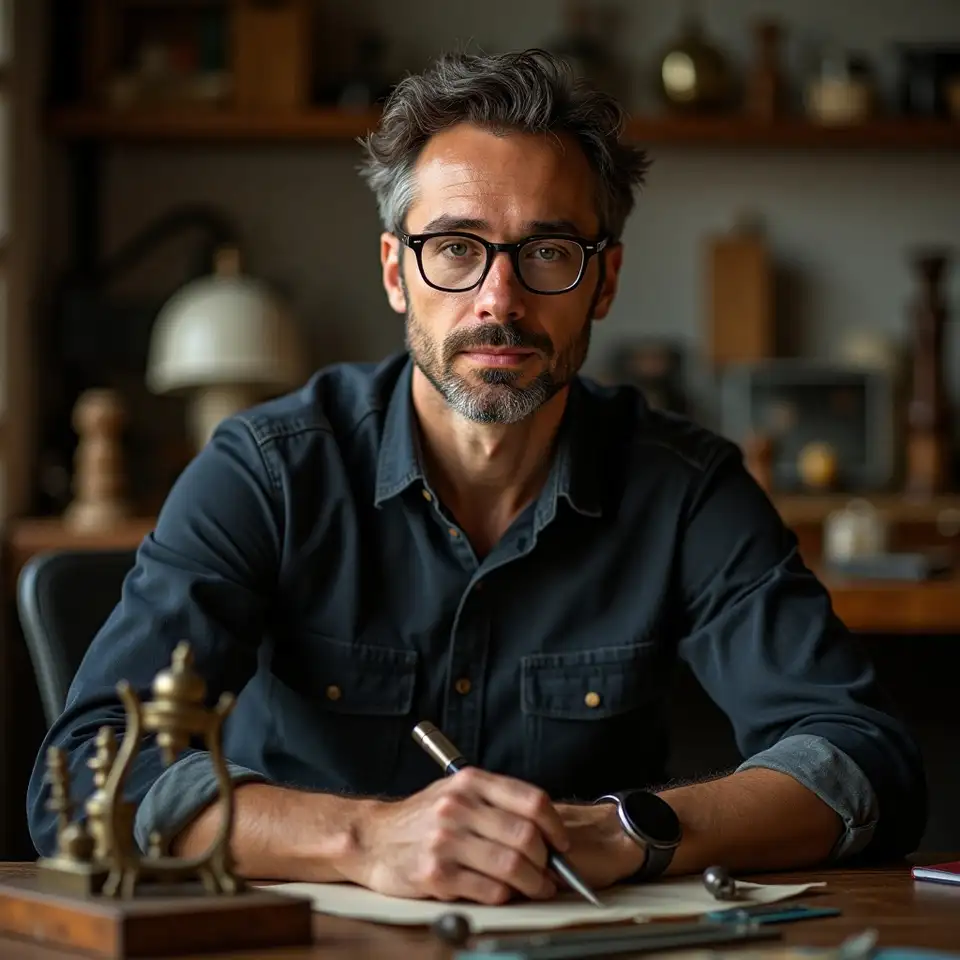
Portrait of a thoughtful collector and researcher in natural light

Cookies Notice

This site uses cookies to support technical operation and to collect anonymised usage data that helps improve content and navigation. No personal data is sold or shared for marketing purposes. You may accept all cookies or reject non-essential ones at any time.
Read our Cookie Policy